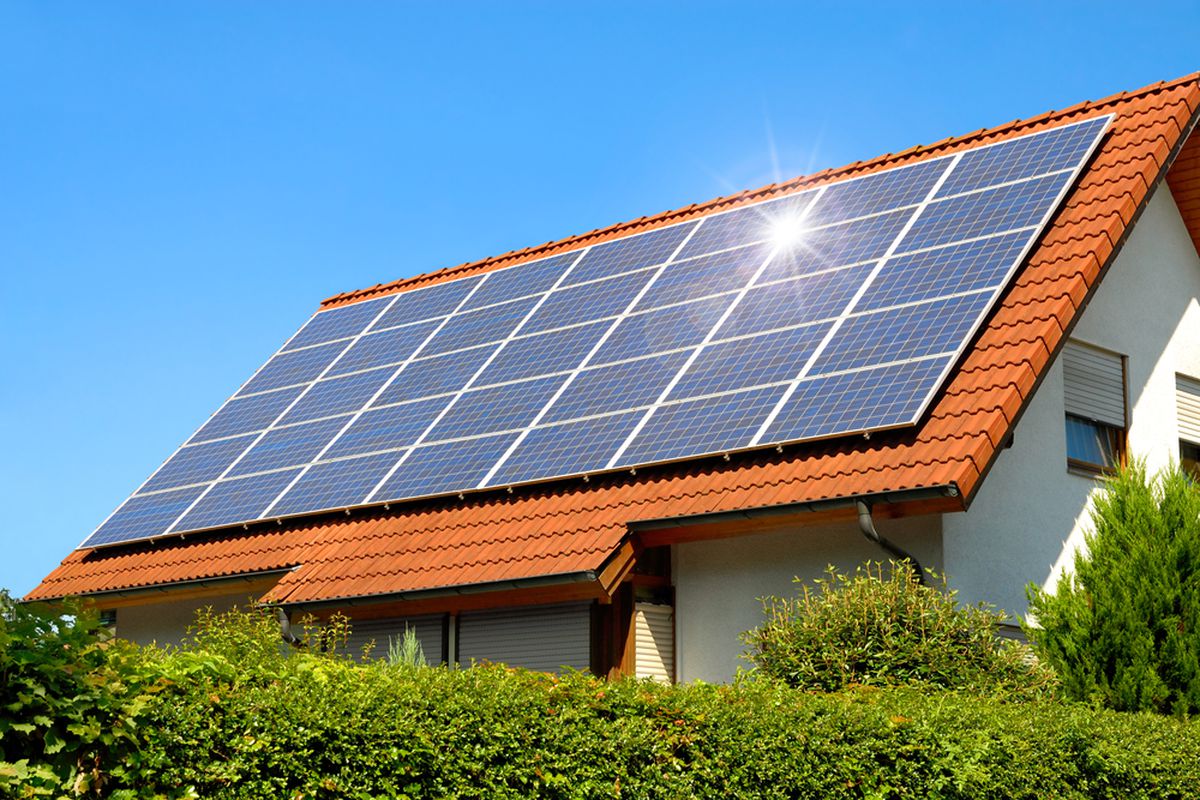
We had a roof top solar array and Tesla Powerwall II battery installed back in 2022. Since then, we’ve been electrifying the house to take advantage of the solar and to get off of fossil fuels.
We switch the hot water heater from off the propane boiler to an electric heat pump hot water heater. Added two heat pumps and run the most of the year for heating and cooling. And added a bio-fuel heating device – a wood stove.
Our solar array provided most of the electricity for all of this but when my wife got an Ford Mustang Mach-E, we really started to see a deficit between our solar production and our electricity usage.
The Mach-E alone can gobble up over 65 Kwhs if going from 10% to 100% although in a typical day it only has to be topped off with about 12 Kwhs for the 30 mile daily commute.
But that’s all of the solar power saved up in the Powerwall II which has about a 13.5 Kwh storage capacity.
On top of that, our utility here in NH, Eversource, charges us over 50% of our electric bill for delivery charges.
So our goals are to:
- 1. Produce more solar power to cover the usage
- 2. Store more of the excess solar power produced during the day for the nightly charge-up.
We had our original installer, Granite State Solar (GSS), come out and evaluate the situation. Unfortunately, the Tesla Powerwall II was discontinued so we can’t expand storage by adding another Powerwall. (The newer Powerwall III uses a different chemistry and isn’t compatible with the Powerwall II).
Also, the older 10 kVA transformer on our “telephone” pole is undersized for a modern house with lots of electrical appliances. We are limited by the transformer on how much “juice” we can push back to the grid through it, thus we are unable to add any more panels until Eversource gets around to upgrading our transformer.
So my solution is in two parts. 1. Adding extra storage capacity via an off grid storage solution – basically a “solar generator” which is an inverter (converts DC to AC or AC to DC) with battery storage.
Plugged into a standard wall outlet and set to charge up in the afternoon when the Powerwall is typically filled, will allow us to store more solar power instead of sending it out the grid.
We have Net metering which means the utility gives us credit for excess power generated but they do take delivery charges out of it. By storing our own power, we’ll have more to use to charge up the EV at night.
Luckily, I had already installed a manual transfer switch for a gas generator that served as our backup before getting the solar/battery set up.
Once the solar generator is ready I’ll connect the garage circuit to it so that the 20 Amp outlets in the garage can slowly charge up the EV overnight using the mobile charger (Level 1).
If we need a faster charge, we can always just plug in the Level 2 charger plug.
The next step will be to run some solar panels to the solar charger itself. These will be off-grid and only used to charge up the battery in the solar generator. Using the manual transfer switch I can switch over a few circuits such as the fridge or office to the batteries in the solar generator.

The hardest thing about solar panels is getting them to your house and installing them on a roof, wall or sturdy stand. These portable panels are more expensive and more apt for damage but they are easier to have shipped to your house, are lighter and can be stored away. https://m.media-amazon.com/images/I/71gyEJgbXeL._AC_SL1500_.jpg

This is the solar generator or power station I went with, the Pecron F5000LFP Power Station. It is a 5120Wh Solar Generator with 7200W AC Output, 6400W Solar Input, 120V/240V Dual Voltage, and is expandable to 35.8kWh.
I also purchased two expansion batteries for a total of over 15 Kwh.

Reliance Controls Corporation 31406CWK 30 Amp 6-circuit Pro/Tran Transfer Switch Kit for Generators (7500 Watts) – This is what I use to manually switch over important circuits or just to run those circuits with the power station I.e. the EV on the garage circuit.

I’m installing this NEMA 30 amp receptacle at the end of the wire that formerly was hardwired into the transfer switch – https://amzn.to/3QI6VAR

Automatic Transfer Switch for Freezer
Freezer plugged into power station. If AC output from the power station cuts off, transfer switches over to grid/rooftop solar array/Powerwall II battery