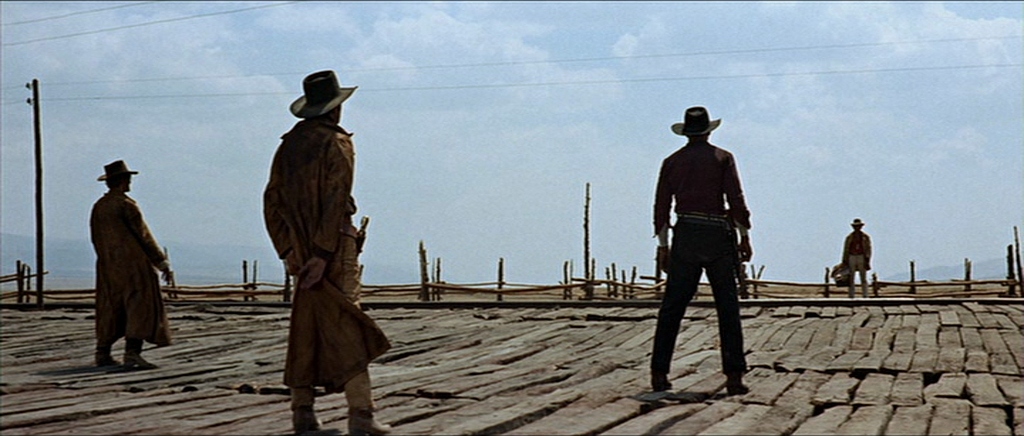
Looks like we’re shy one horse!
Set in the dying days of the Old West, a struggle to control water in a dusty desert town embroils three hard-bitten gunmen in an epic clash of greed, honor, and revenge. One of the most iconic, and influential, movies ever made, Sergio Leone’s monumental epic is presented here in 4K Ultra HD, from a restoration off the original camera negative by Paramount’s archive team, L’immagine Ritrovata and The Film Foundation. Special thanks to Martin Scorsese for his consultation on this restoration.
Harmonica: [facing three men] And Frank?
Snaky: Frank sent us.
Harmonica: Did you bring a horse for me?
Snaky: Well… looks like we’re…
[snickers]
Snaky: …looks like we’re shy one horse.
Harmonica: [shaking head] You brought two too many.

Once Upon A Time in the West – 4K UHD Blu Ray
The Colourbox song “Looks Like We’re Shy One Horse” which samples Once Upon A Time in the West is from their self-titled 1985 album (sometimes referred to as the 1983 album due to earlier 12″ releases).
This track prominently features dialogue samples from Sergio Leone’s iconic 1968 Western film, “Once Upon a Time in the West.” Specifically, it samples lines spoken in the movie, adding a distinctive and atmospheric element to the electronic/dance sound of Colourbox.
The song weaves these spoken excerpts into its musical fabric, creating a unique blend of cinematic Western ambiance and 80s electronic music. You can clearly hear the voices and the context of the samples evokes the film’s mood and characters.
It’s worth noting that the same Colourbox track also samples dialogue from another Sergio Leone Western, “Duck, You Sucker!” (also known as “A Fistful of Dynamite”).
Here is the album –https://amzn.to/3S8HS7O
What Makes This Movie So Great?
“Once Upon a Time in the West” isn’t just a great Western; it’s a cinematic masterpiece that resonates on multiple levels. Here’s a breakdown of what makes it so exceptional:
1. Deconstruction and Reinvention of the Western Genre:
- Myth vs. Reality: The film consciously engages with and subverts classic Western tropes. It presents a more brutal and cynical vision of the West, contrasting the romanticized ideals with the harsh realities of violence, greed, and the relentless march of progress.
- Pacing and Tension: Director Sergio Leone masterfully employs a deliberate, often slow pace, building immense tension through extended silences, lingering close-ups of weathered faces, and the vast, desolate landscapes. This contrasts sharply with the faster editing of many earlier Westerns, forcing the viewer to become immersed in the atmosphere.
- Archetypal Characters with Depth: While the characters embody certain Western archetypes (the mysterious stranger, the ruthless villain, the determined woman), they are given a layer of complexity and hidden motivations that go beyond simple good versus evil.
2. The Power of Atmosphere and Style:
- Visual Poetry: Leone’s visual style is instantly recognizable and breathtaking. The widescreen cinematography captures the epic scale of the American West, while his use of extreme close-ups intensifies emotion and focuses on the smallest details – a bead of sweat, a twitch of the eye.
- Sound Design: The film’s use of sound is crucial in building atmosphere. The creaking of the windmill, the buzzing of flies, the distant sound of the train – these elements create a palpable sense of place and heighten the tension before any action occurs.
3. Ennio Morricone’s Iconic Score:
- A Character in Itself: Ennio Morricone’s score is arguably one of the greatest in cinematic history. The haunting melodies and distinctive leitmotifs are inextricably linked to the characters and themes of the film. Each major character has their own musical signature, instantly evoking their presence and emotional state.
- Integration with the Film: Leone famously had Morricone compose the score before filming began, and he would often play the music on set to inspire the actors and create the desired mood. This unusual approach resulted in an unparalleled synergy between the visuals and the music.
4. Casting Against Type and Performances:
- Henry Fonda as the Villain: The casting of the quintessential “good guy” Henry Fonda as the ruthless killer Frank was a stroke of genius. His chilling portrayal shatters his established screen persona, making the villain all the more unsettling.
- Charles Bronson’s Enigmatic Presence: Charles Bronson’s “Harmonica” is a man of few words but immense presence. His piercing gaze and the mournful sound of his harmonica create a mysterious and compelling figure driven by a hidden past.
- Claudia Cardinale’s Strength and Resilience: Claudia Cardinale’s Jill McBain is a strong and independent woman who defies the typical damsel-in-distress role often found in Westerns. She becomes the symbol of civilization and the future of the West.
5. Themes of Progress, Revenge, and Loss:
- The End of an Era: The film subtly explores the changing landscape of the West, with the arrival of the railroad signaling the end of the lawless frontier and the traditional way of life.
- The Cycle of Violence and Revenge: The theme of revenge is central to the plot, highlighting its destructive nature and the emotional scars it leaves on individuals.
- Loss and the Price of Progress: The characters grapple with loss – of loved ones, of innocence, of a way of life – as the West undergoes its transformation.
In essence, “Once Upon a Time in the West” transcends the typical Western narrative through its operatic scale, its masterful use of cinematic language, its unforgettable characters, and its profound exploration of timeless themes. It’s a film that stays with you long after the credits roll, prompting reflection on the myths and realities of the American West and the human condition.