American produced Godzilla movies have always felt like one of those Americanized Chinese restaurants with their General Gao’s Chicken and rolls on the table, because after all, American’s like their bread.
There are 38 Godzilla films so far with thirty-three coming out of Japanese ( distributed by Toho Co., Ltd.) and five American films; one by TriStar Pictures and four films (part of the Monsterverse franchise) by Legendary Pictures.
I just feel like the Hollywood Godzillas are the bread rolls on the table where as the Japanese films are the main dish. Sure the American films are awash with expensive CGI effects but they are missing heart.
The original Godzilla from the Japanese perspective is a commentary on the environment. Pollution from the two nuclear bombs dropped on the island nation in World War II as well as the environment deterioration in the 1960s as the country faced rapid growth.

Air pollution resulting from sulfur dioxide and nitrogen dioxide emissions caused a significant rise in cases of asthma and bronchitis.
In urban areas photochemical smog produced automotive industrial exhaust furtherated respiratory issues. During the early 1970s chronic arsenic poisoning was linked to dust originating from arsenic mines.
Ocean pollution is especially important when the island’s main proteins come from the sea.
Out of this concern for the environment sprang an enduring series of films in which giant monsters from the sea represent the environmental challenges of the day.
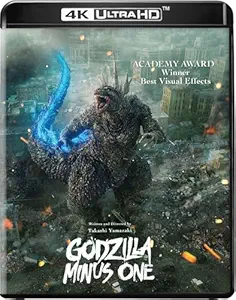
After seeing some of the American Godzilla movies in the Legendary Pictures Monsterverse franchise, Godzilla Minus One was so refreshing because the storyline among the humans was so good – the humiliation of a devastating defeat following World War II, the economic devastation, and the hardships living in an occupied country.

And as far as the monster battles, the Japanese movie managed to pull of some award winning special effects in a much smaller budget. Godzilla Minus One has the lowest budget of any Oscar VFX Winner in nearly a decade. At a budget estimated around $15 million, Godzilla Minus One was 1/10th the budget of other VFX Oscar winning movies in the past decade or so.
- 2023: Godzilla Minus One: $10 million-$15 million
- 2022: Avatar: The Way of Water: $350 million-$400 million (Source: The Hollywood Reporter)
- 2021: Dune: $165 million (Deadline Hollywood)
- 2020: Tenet: $205 million (Variety)
- 2019: 1917: $100 million (The Hollywood Reporter)
- 2018: First Man: $60 million (Variety)
- 2017: Blade Runner 2049: $150 million-$185 million (The Hollywood Reporter)
- 2016: The Jungle Book: $175 million (Box Office Mojo)
- 2015: Ex Machina: $15 million (Consequence)
- 2014: Interstellar: $165 million (Box Office Mojo)
What makes Godzilla Minus One so great is not the Oscar winning special effects the heart in the story. Sure, there is a giant monster wrecking havoc and tossing trains around while the American’s are two busy rebuilding Europe to help, so Japan’s meager coast guard will have to handle things, but you’ll find a very human story at the core of this film, and you might even find yourself shedding a tear.