There is a quiet, tactile beauty to old steel. In his black-and-white photograph Vintage Sedan Automobile, photographer Edward Fielding captures the rear quarter of a classic sedan resting on a patch of rough grass in Newport, New Hampshire. Rather than stepping back to show the entire vehicle, Fielding moves in close, turning the car’s rounded fender, chrome trim, and vertical taillight into an abstract study of form and texture.
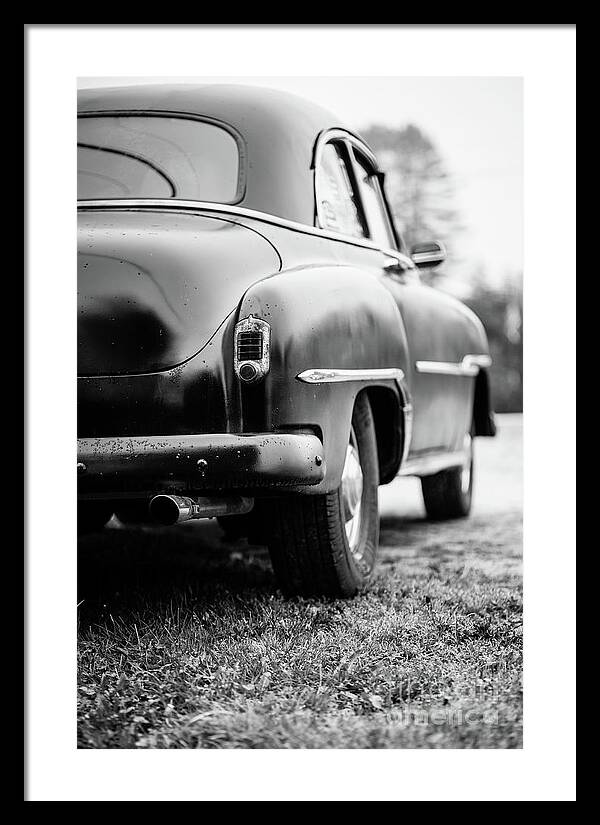
https://edward-fielding.pixels.com/featured/vintage-sedan-automobile-edward-fielding.html
A Dialogue with the Masters
Fielding’s approach in this frame echoes the sensibilities of several iconic photographers from the 20th century:
- The Sculptural Precision of Edward Weston: In the 1920s and 30s, Weston revolutionized photography by isolating everyday objects—from seashells to peppers—to reveal their pure, sculptural curves. Fielding applies that same formalist eye to mid-century automotive design, letting the sweeping lines of the rear fender and bumper dominate the composition with bold, dark tonalities.
- The Quiet Americana of Walker Evans: Walker Evans famously documented the vernacular landscape of America, treating parked cars, weathered facades, and rural roadsides with unsentimental dignity. Captured in a small New England town, Fielding’s sedan sits naturally in the grass, beaded with moisture after a rain, evoking a lived-in sense of history rather than a polished museum display.
- The Atmospheric Road Trips of Robert Frank: In his seminal 1958 book The Americans, Robert Frank frequently used automobiles as symbols of solitude, movement, and the passing of time, often framing them with shallow depth of field and moody contrast. Fielding’s soft, out-of-focus background and rich monochrome palette create a similar sense of stillness and cinematic melancholy.
The Beauty of Imperfection
What makes Vintage Sedan Automobile especially compelling is its honesty. Tiny water droplets cling to the dark paint, subtle dings ripple along the metal, and blades of grass frame the bottom edge. By stripping away color and isolating these weathered details, Fielding transforms a stationary piece of machinery into a timeless meditation on craftsmanship and memory.
Art Historical Context
- Modernist Formalism (Precisionism and Straight Photography): In the early-to-mid 20th century, photographers like Edward Weston, Paul Strand, and Alfred Stieglitz elevated photography as a fine art by zooming in on ordinary objects—such as machine parts, seashells, and fenders—to celebrate their pure lines and tonal range. Fielding’s tight framing and focus on industrial curves directly continue this modernist tradition.
- Vernacular Americana and Documentary Tradition: Within American art, the automobile has long symbolized freedom, industry, and the passage of time. Artists like Walker Evans, Robert Frank, and William Eggleston frequently photographed parked or aging cars in rural towns to capture an unvarnished portrait of everyday American life. Placing this weathered sedan in a small New England town connects Fielding’s work to that poetic documentary lineage.
- Contemporary Fine Art and Nostalgia: In the broader contemporary art market, monochrome automotive photography bridges the gap between industrial design appreciation and romantic nostalgia. By stripping away color and highlighting natural decay—water beads, dulling paint, and encroaching grass—Fielding aligns with contemporary photographers who explore themes of memory, impermanence, and the quiet beauty of forgotten objects.